December 2017

Rewired-sponsored team qualifies to the national round of the Vex IQ challenge

In late November, Dillan Shah approached Rewired to ask for help getting his team to the VEX IQ Ringmaster Challenge. His team, Gear Squad, recently qualified for the national round of the competition.
Gear Squad at the regional competition in London
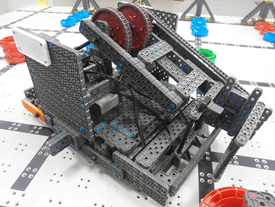
Gear Squad’s robot
Gear Squad preparing their robot

The VEX IQ ringmaster challenge is an international robotics competition for elementary and junior high school students in which students must form teams and build robots to perform challenges. We were highly impressed by the remarkable curiosity, determination and genuine love of learning shown by the 13-year-old boys. It was an honor to support Gear Squad who were representing Queen Elizabeth’s School — Barnet — in the UK.

The challenge presents a complex problem and allows students to engineer a solution whichever way they like. This style of hands-on, creative, and exploratory learning is a welcome change to a traditional classroom setting.

VEX IQ is brilliant in its approach to encourage critical thinking by allowing students to design their own solution. The challenge is also designed to promote teamwork as team members must collaborate among themselves as well as with other groups to develop effective strategies. Additionally, the students must prepare a STEM-related research project on a topic of their selection.

Gear Squad chose to research the potential of robotics in enhancing the IVF process, as well as the ethical implications of such an application.

Gear Squad’s journey towards the final competition in Kentucky started with a regional challenge in London. On Saturday 9 December 2017, I went to Fortismere school in London to attend their performance at the Regional Competition. The team includes Dillan Shach, group leader, Varun Vijaykumar who programmed the robot, Shilacsan Lingakumar who designed the robot, Alex Woodcock who built the robot, and Vihaan Jain who led the STEM research project.

Gear Squad are not newcomers to such a competition, having won two regional and three national titles, including the Excellence Award (the highest accolade in the VEX IQ Programme) at last year’s televised National finals in Kentucky, US.

“Training takes place daily before school, at lunchtimes, and then after school,” Dillan told me in an interview. Dillan’s father chimed in about the boys tinkering with the robot to make last-minute adjustments at two o’clock in the morning of the day of the regional competition, and then hearing them up at five o’clock rehearsing their performance.

At the competition, Gear Squad had a slow start with scores below their expectations. However, they immediately made alterations to their robot and the code, and began working more effectively among themselves and with other teams.

At the end of the day, Gear Squad won the competition with a score of 143, the highest of the 23 teams attending. The boys also won two other awards: the teamwork award for getting the highest score with their partners, and the STEM award for producing the best research project.

With these results, Gear Squad has qualified for the national competition in February 2018.

The key factor in their victory was their love of what they were doing, with genuine joy in every step of the process, and true excitement to face intellectual challenge.

Much can be learned from the VEX IQ’s endeavor to increase engagement in STEM and robotics. According to the U.S. Department of Commerce, STEM-related occupations are growing 7% faster than other occupations and generally yield 26% higher incomes. Many of today’s students will be doing jobs that have not even been invented yet.

By encouraging critical thinking skills and creativity, challenges such as these and education more broadly will be able to instill in their students a love of learning that will adequately prepare them for a constantly evolving society. In both STEM as well as humanities, we must all endeavor to encourage youth to think critically and creatively for such skills are useful in all paths of life, regardless of the setting or time.

There is no way to stop the boys of Gear Squad from doing what they love: this is what has brought them to where they are now, and will carry them onto great achievements in the future.

Rewired is excited by the prospect of young people engaged in robotics, and we are delighted to witness in Gear Squad the best of human curiosity and ingenuity.

More on Gear Squad coming soon.

Rewired-sponsored team qualifies to the national round of the Vex IQ challenge Read More »

Seldon and Rewired Partner to expand ML platform into the world of robotics and IoT

Today we’re excited to announce that Rewired has partnered with Seldon to help them expand their innovative machine learning deployment platform into the world of robotics and IoT.

Alex Housley and the talented team at Seldon are democratizing machine learning deployment, making it easier for not only data scientists, but also developers and decision makers to harness the power of this transformational technology.

Seldon’s open-source machine learning platform is used by thousands of data scientists around the world across industries and their team works directly with some of the world’s largest organisations.

In support of the partnership, Rewired has invested in Seldon, and will provide robotics development and business expertise, provided by our world-class scientific advisors and general partners.

We at Rewired believe that improving machine perception will unlock the next generation of smart robotics. We’re investing not only in sensors but also in software and systems that help autonomous machines to interact with unpredictable environments and collaborate with humans.

Managing AI workflows is complicated. The Googles and Facebooks of the world have extensive in-house machine learning and data science teams. Deep tech expertise is both costly and in short supply: There are more than 1,000 developers for every data scientist in the world. (Recent research from Evans Data puts the number of developers worldwide at 21 million. The number of data scientists in 2018 will reach 58,000.)

That’s why we need solutions for everyone else, solutions like Seldon Deploy, Seldon’s newest machine learning deployment platform. Seldon Deploy helps not only data scientists but also any developer or business user to manage deployment workflows, providing new capabilities around infrastructure, collaboration and compliance. (You can join the beta here: http://join.seldon.io/deploy/)

Intelligent systems are increasingly becoming decentralized with more data gathering and decisions at the edges of the network. To process sensor data and to fuse various modalities of data together we need to build machine learning platforms that leverage container-driven architectures to help modularize and orchestrate the work of different algorithms running on the edge. You can read more about the intersection of AI and robotics in this article, which Rewired’s Santiago Tenorio and Seldon founder Alex Housley coauthored for VentureBeat.

In partnering with Seldon we’ll be helping to build accessible machine learning solutions that can live on the edge and bring AI/ML to robotics everywhere.

The next generation of smart robotics depends on it.

Seldon and Rewired Partner to expand ML platform into the world of robotics and IoT Read More »

Aromyx and Rewired Partner to Advance Sensory Capabilities for Smart Robotics

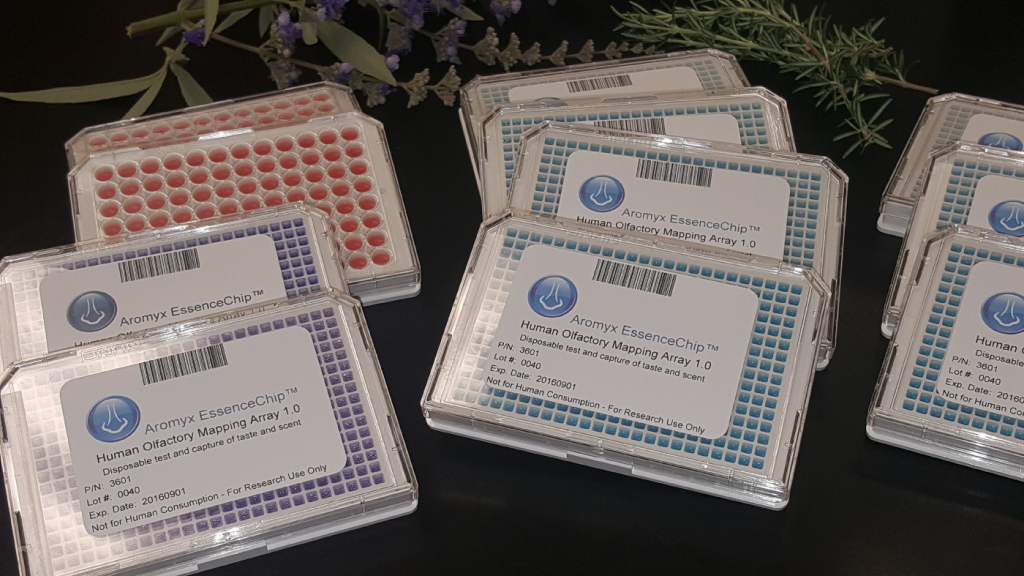
We are thrilled to announce our partnership with and investment in Aromyx Corp. As the maker of the EssenceChip™, the digital platform for measuring taste and scent, Aromyx is directly aligned with our mission to advance machine perception in intelligence machines.

Aromyx develops technologies that for the first time enable scientific, reproducible measurement and digitization of taste and scent.

Until now, these sensory capabilities have been limited by the complexity of replicating the olfactory system in a way that is both scalable and repeatable.

Aromyx EssenceChip™

It has been perfectly stated by SNS in their Global Report on Technology and the Economy, already. “For hundreds of years, if not longer, humans have had the dream of understanding, and then re-creating, the power behind the sense of smell. All of us are aware of the near-hypnotic power of this “fifth” sense, which seems to have a direct path not only to the brain, but also to our emotional associations with the past and present.”

Aromyx’s work to unlock this dream is both technologically impressive and a vital step for innovation in countless industries.

The first of its kind, Aromyx’s EssenceChip™ is a disposable biosensor that places the human taste and olfactory receptors into a biochip. The applications for this kind of technology are profound: from food and beverage quality control, flavor and fragrance, consumer packaged goods, and chemical and agricultural industries.

The ability to apply this technology to robotics will also help us detect and capture new modalities of data. These new modalities will inform decision making in autonomous machines and inspire the development of new learning models.

We are thrilled for our future work to explore novel applications of taste and smell for smart robots. The next generation of these intelligent machines will be based on their ability to both sense, and make sense of the world around them.

With these advancements, we are building a future defined by the successful collaboration of robots and humans.

Aromyx and Rewired Partner to Advance Sensory Capabilities for Smart Robotics Read More »

Rewired @ Opportunities Fair — The Postdoc Center of the University of Cambridge

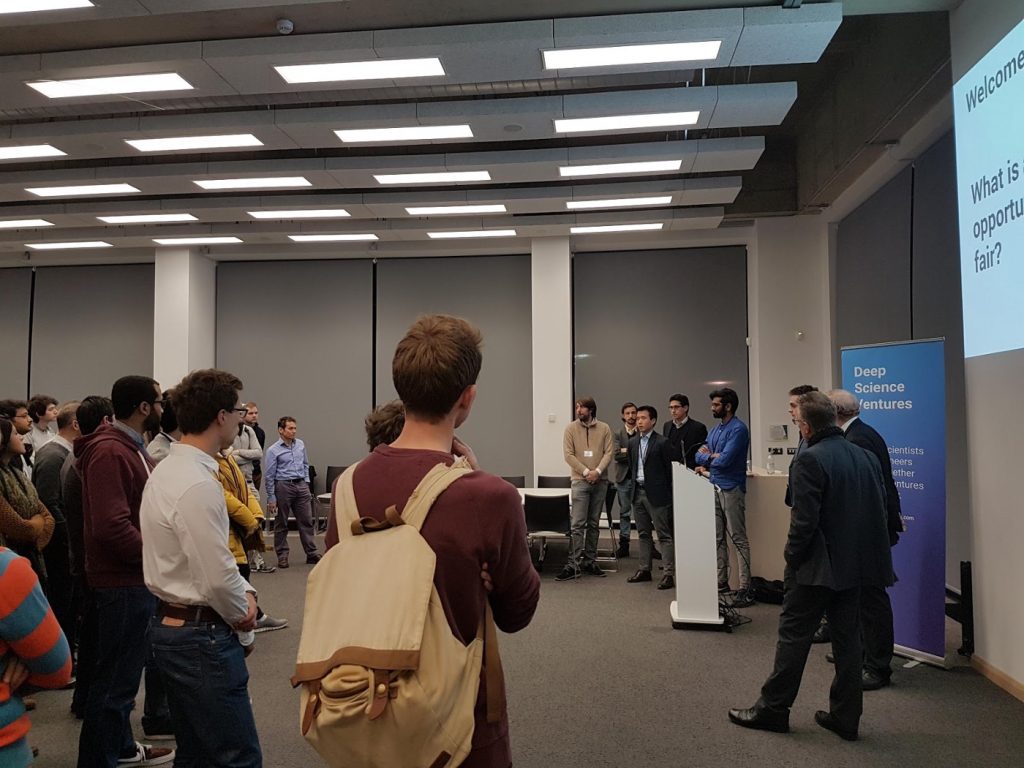
Last week, Rewired presented at the Opportunities Fair at the Postdoc Center of the University of Cambridge. Hosted by Deep Science Ventures, the Opportunities Fair brought together scientists and experts from the fields of immunology, biotech, and robotics, including Prof. Mark Coles of the Kennedy Institute of Rheumatology at the University of Oxford, Nirmesh Patel of Cambridge Cancer Genomics, and neuroscientist Jason Miranda of Galvani Bioelectronics.

Rewired contributed our insights regarding human-machine interfaces for collaborative robotics as well as wearable applications, e.g. bionic arms.

The event gave entrepreneurs and researchers the opportunity to speak to Cambridge postdocs about the complex challenges they face when conducting biotech research and attempting to commercialize medical technologies. Participants remarked on urgent needs, such as for electroencephalography sensors that do not suffer from cross-talking and new approaches to stimulating internal organs for therapy.

Rewired discussed the need for an intuitive human-machine interface for surgery robotics and how to better design remote-controlled robots in hard-to-reach environments. In the lively debate that ensued, we also stressed the importance of avoiding technological perfection at the cost of lower practicality.

Consider, for example, A the design choice between a highly effective but invasive medical solution and a semi-effective but non-invasive one.

While the former may be technologically superior, the latter is better suited for broad market adoption and will likely prove to have a greater real-life impact.

At Rewired we believe in supporting technologies that set new standards for scientific achievement. At the same time, we believe that an early focus on practicality will help to ensure that more technologies emerging from research environments successfully find real-world applications and make a real-world impact.

Rewired @ Opportunities Fair — The Postdoc Center of the University of Cambridge Read More »

ROVENSO (led by Rewired advisor Thomas Estier) Wins 2nd Prize at the IAEA Nuclear Decommissioning Competition

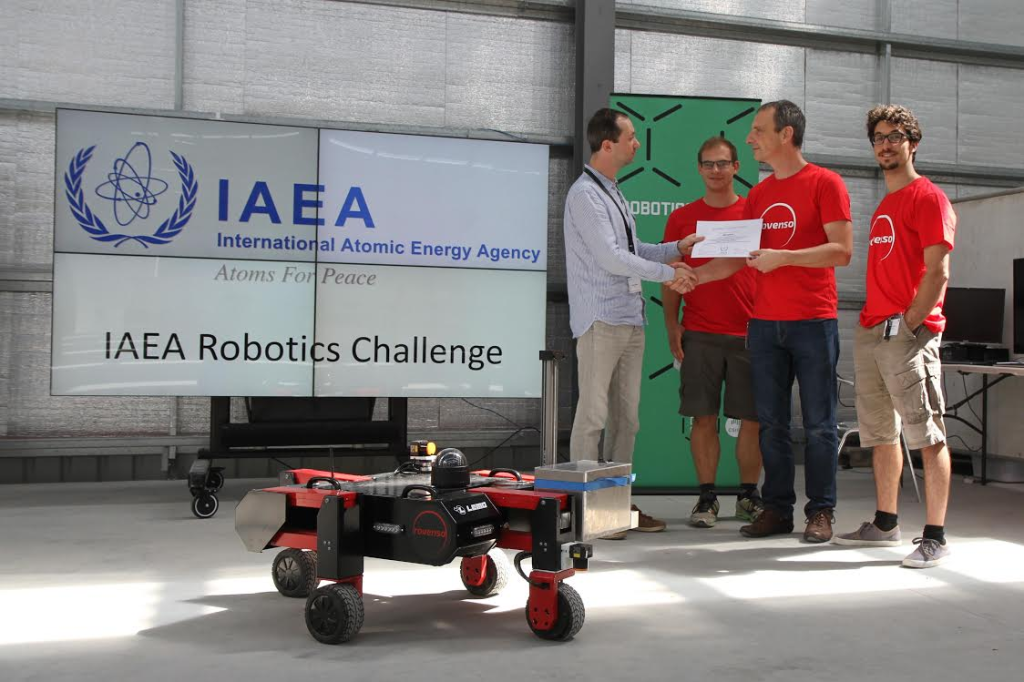
We are happy to announce that Thomas Estier’s company, ROVENSO, has won 2nd prize at the IAEA Nuclear Decommissioning Competition. The competition, held in Brisbane from the 20th to 24th of November, featured ten carefully selected participants. Each team was challenged to produce robots that assist IAEA experts during inspections of nuclear sites.

As the competition description details, “some of the most common tasks undertaken by the IAEA inspectors involve making repetitive measurements in areas that can be difficult to access, or with elevated radiation levels. This is a domain where robotics could play a role, not only to improve the working conditions of the inspectors but also to enhance the consistency of the IAEA measurements.”

ROVENSO’s choice to participate was an obvious one. A Swiss startup of EPFL (Ecole Polytechnique Fédérale de Lausanne), Thomas has worked with his team to develop agile robots operable in complex scenarios, combining remoter operated tasks and automated process. This includes manipulation of heavy payloads, operations in harsh environments, and maintenance of assets in challenging terrains.

The potential of robotics to overcome some of today’s greatest challenges is just being realized. Just this month, robots finally found the reactors’ melted Uranium fuel in Fukushima, six years after the event.

IAEA’s competition is the perfect example of leveraging advancements in robotics to uncover new tools and methods, and inviting the community to participate in something that is both technologically challenging and beneficial to society at large. Thomas and his team are more than deserving of this accolade.

ROVENSO (led by Rewired advisor Thomas Estier) Wins 2nd Prize at the IAEA Nuclear Decommissioning Competition Read More »